
Winter
Frozen Pipe? What to Do Before It Bursts
Updated · Kestrel editorial · 2 min read
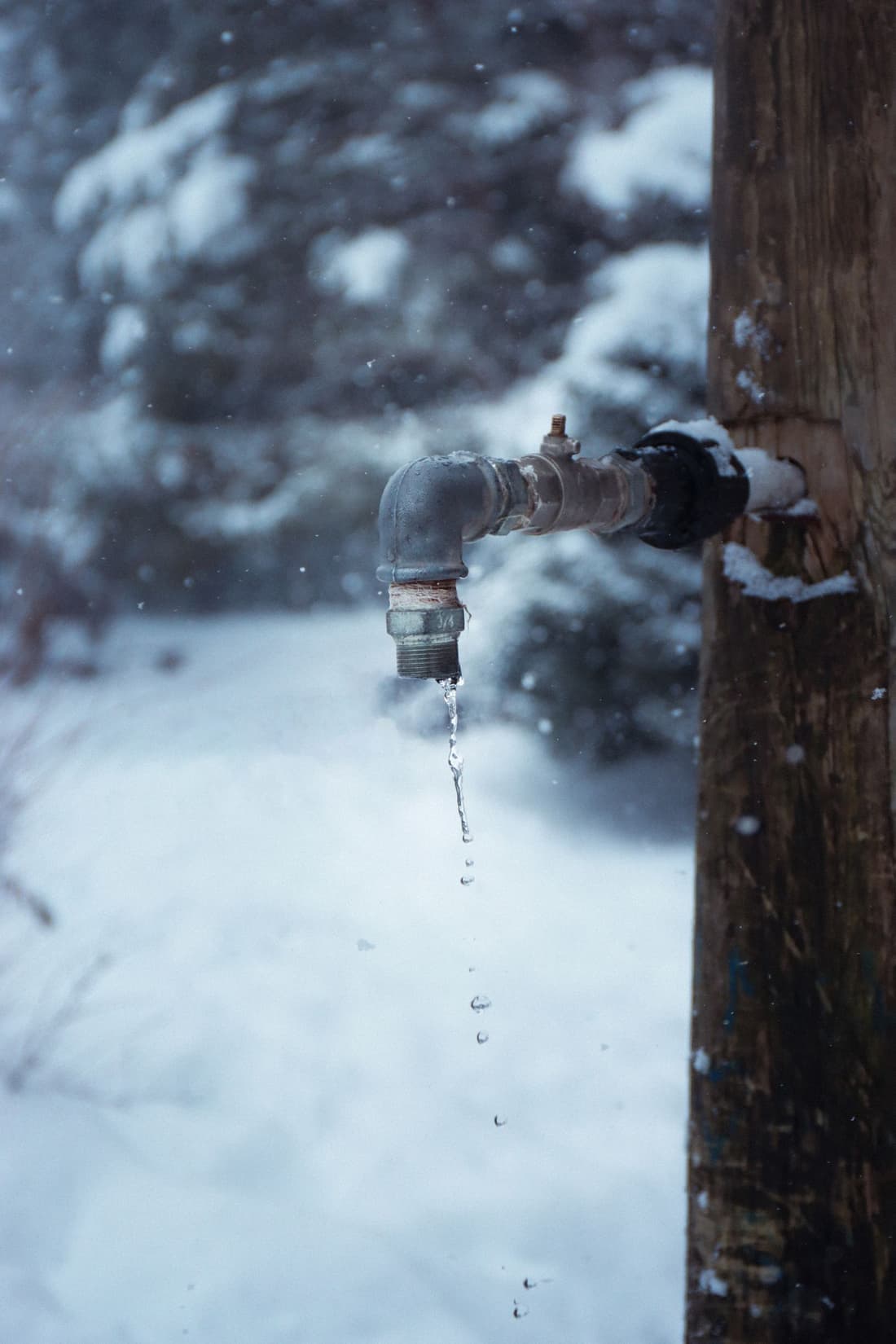
Find the frozen section
Frozen pipes are usually along exterior walls, in crawl spaces, garages, under sinks on outside walls, or near hose bibs.
Thaw it safely
Do this:
- Open the faucet so melting water can flow
- Warm the pipe with a hair dryer, heat tape or space heater
- Open cabinet doors to let warm air in
- Keep warming until full flow returns
What not to do
Avoid torches, open flames and very hot water on plastic pipe; they can start fires or crack fittings.
When to call
Call if you can't reach the frozen section, if it doesn't thaw, or if you see water — a burst often shows only after thawing.
Finding the frozen section
If one faucet has no water, the frozen section is usually on that fixture's line, along an exterior wall or in an unheated space. If the whole house has no water, the service line or the pipe where it enters the house may be frozen.
- Check pipes in exterior walls, garages, crawl spaces and under cabinets on outside walls
- Feel along the pipe: frozen sections are noticeably colder
- Look for frost or bulging on exposed pipe
After it thaws
Keep the faucet open and watch the pipe and the ceiling or walls around it as it thaws: a split often only leaks once the ice melts. Know where the main shutoff is before you start. On sub-zero nights, open cabinet doors on exterior walls and let those faucets drip.
Call a professional if
- Never use a torch or open flame
- If a pipe has already split, shut the main and call
- Don't restore water until the split is repaired
Frozen Pipe? What to Do Before It Bursts: follow-up questions
Should I let faucets drip in a cold snap?
Yes, on exterior-wall fixtures. Moving water is less likely to freeze.
Every home differs; editorial standards.